
ORG End of Year Review 2025
Digital rights in 2025
From age verification and digital ID to crime-predicting tech and attacks on migrants’ digital rights, this year we had to fight harder than ever against Big tech and government policies that threaten our rights. Here’s what we achieved with your help.

Exposing eVisa harms
The UK’s shambolic eVisa scheme has left migrants unable to prove their right to work and live in the UK — with devastating consequences, including people losing job offers, university places and even being made homeless. We spoke abouit this at an event in parliament, chaired by John McDonnell MP.
Joint research revealed the emotional and practical toll the scheme takes and forewarned what could happen if digital ID is rolled out to everyone.
After finally obtaining the Home Office’s DPIA, we found it incomplete and misleading, and in breach of the Home Office’s GDPR and equality duties. 19 organisations joined us in calling for the ICO to investigate.
Taking on Stalker Ads
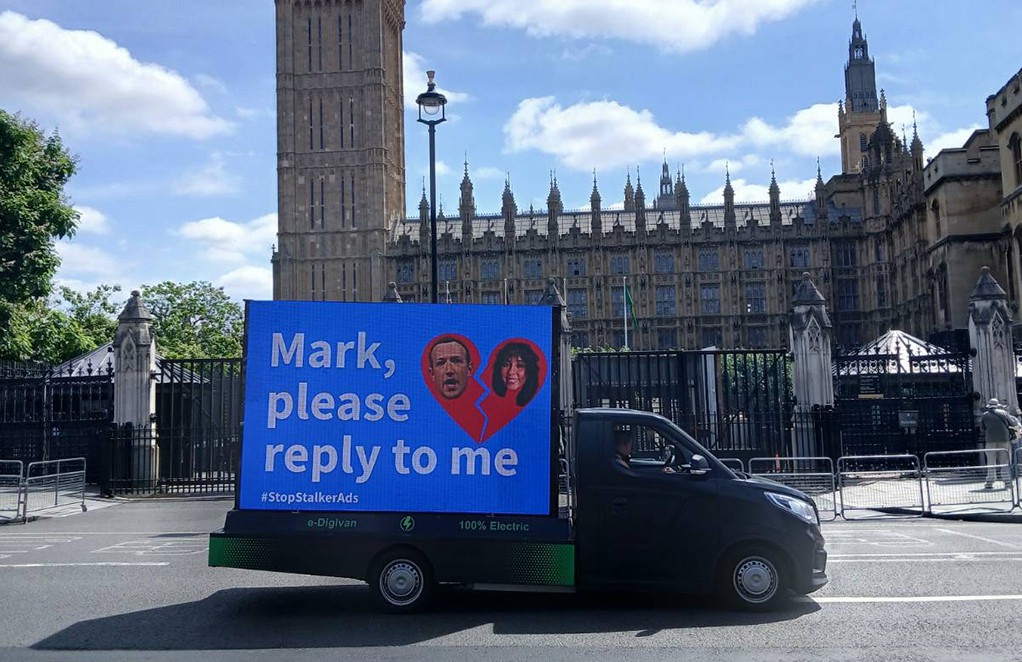
Meta may have settled with activist Tanya O’Carroll, but they’re still determined to bombard the rest of us with invasive “stalker ads.”
This year we investigated how Meta’s targeted ad system both fuels discrimination and spreads misinformation but also published a roadmap showing exactly how Meta could adopt healthier, rights-respecting advertising models.
We helped the public to formally object to targeted ads and even visited Meta’s offices to ask why they were ignoring us. They’ve since announced a flawed ‘pay or consent’ model – so this fight isn’t over!

Investigating Election Canvassing apps
Our investigation uncovered major privacy gaps in the canvassing apps used by UK parties — including questionable uses of voter data that may even breach the law.
Challenging dangerous ‘crime-predicting’ tech
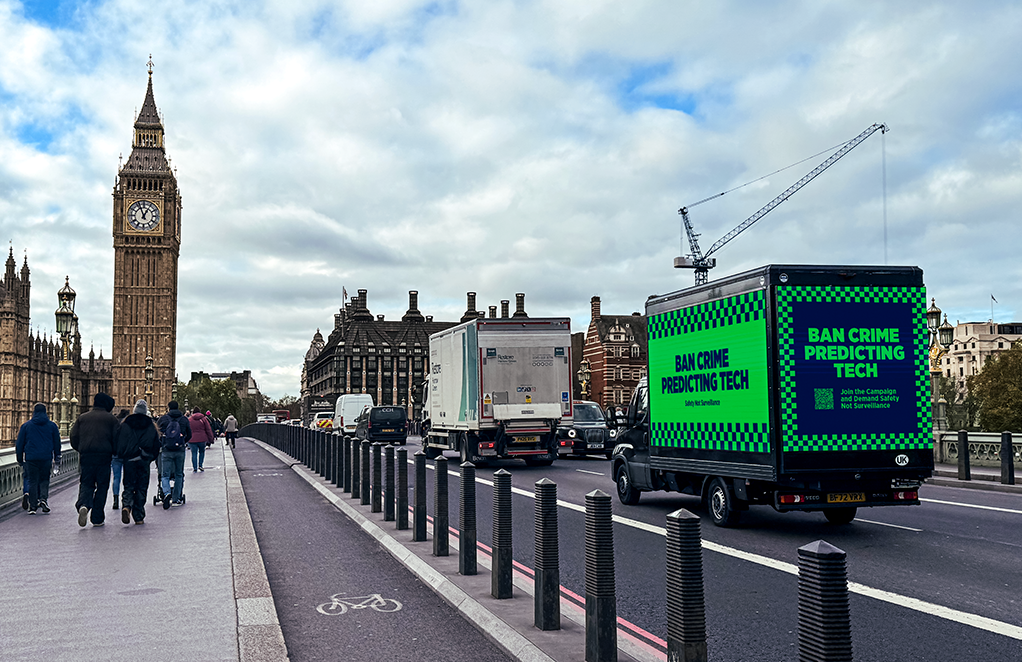
Three-quarters of UK police forces are already using so-called ‘crime-predicting’ technology.
We took the fight directly to the National Police Chiefs’ Conference in Westminster, challenging these harmful automated systems that reinforce bias, erode trust, and threaten civil liberties.
Fixing the Online Safety Act
2025 marked the year Internet users were forced to hand over personal data to unregulated age-verification companies just to content and app features. This was not just about stopping kids from seeing porn – we found health advice and content about Palestine being age-gated.
We tracked this creeping censorship, issued guidance to organisations navigating the Act, and published a major report on how the OSA can (and must) be fixed.
We also united organisations to demand regulation of age-verification providers and warned the public, MPs and regulators that the next wave of OSA rules could suppress young people’s expression and censor political protest.
One way parliamentarians can keep us safer online is through existing competition powers so that users can choose their content prioritisation and moderation engines, and switch their social media provider, without losing their networks of contacts. In our interoperability report, we outline what needs to happen for this to come about.

Defending encryption
When the UK government pushed Apple for backdoor access to encrypted products, we stepped in. We successfully fought to ensure that at least some of Apple’s appeal would be heard in public, recognising the huge global implications for secure communication.
With help from our supporters, we worked with lawyers to make sure the perspective of technologists and privacy services, alongside their users, would be put forward in that case. And although the government has reportedly backed down on forcing Apple to break its own security, the dangerous powers remain on the books. We’ll keep fighting until they’re gone.
Our Practice Safe Text campaign underscored why encryption matters for us all but particularly the LGBTQ+ community who rely on encrypted services to find community, resources and support.

Protecting political protest
The UK’s overly broad terrorism definition, combined with the Online Safety Act, risks pushing platforms to suppress content about Palestine and Gaza.
As reported in the Guardian, we raised urgent concerns with Ofcom and major tech platforms, and highlighted the broader dangers this poses to political speech and rights to protest.
Fighting for your data protection rights
We challenged the harms of the Data Use and Access Bill, which weakened all of our data protection rights and leaves us vulnerable to future changes to how our data can be shared and used without proper parliamentary scrutiny. We also warned that it could lead to the EU Adequacy agreement being struck down.
This year, the ICO reached a new low: refusing to formally investigate the MoD after one of the worst data breaches in UK history — a spreadsheet exposing over 19,000 people fleeing the Taliban.
We brought together over 70 organisations and experts to expose the collapse in ICO enforcement and called on Parliament to launch an inquiry. The Chair of the Science, Innovation & Technology Committee responded, acknowledging “institutional failure” at the ICO.
More to come in 2026.
Revealing the harms of Digital ID
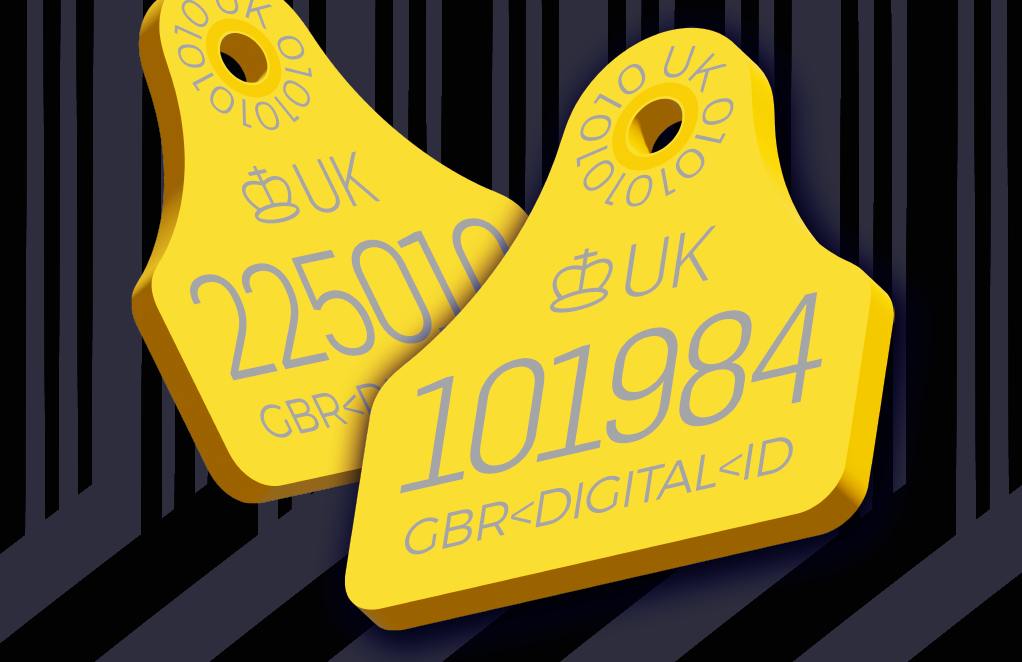
Digital ID will be one of the biggest stories of 2026. We gave written and oral expert evidence to the Select Committee, highlight the risks these plans pose to privacy, equality, and civil liberties.
We know from the eVisa scheme how digital ID could impact people in their everyday lives. We’ll be fighting the introduction of this already expanding scheme next year.
Empowering people to exercise their rights
Our latest toolkit gives migrants and people working within the migrants’ rights sector advice on how their data and digital technology are being used for immigration control and the tools to access their own data. We also provided migrants with free VPNs to help them keep their data secure.